Contents
Espresso is a popular way to prepare and brew coffee. It is easy to find espresso in cafes, restaurants, and homes across the world today. To understand what makes espresso different from regular coffee, it helps to learn about the various types of beans used to create each beverage. Although espresso beans and regular coffee beans come from the same plant, they are roasted differently, ground differently, and brewed differently to create two distinct beverages. Knowing how these two types of coffee beans are processed will be beneficial to anyone who wants to purchase an espresso machine or build a coffee bar at home.
Are Espresso Beans Different from Coffee Beans?
Well, not really. Espresso coffee and coffee beans are the same beans originally planted in coffee.
What’s different is:
- Roast degree, which affects the taste, smell, and strength of the beans
- The grind, which determines how fast or slow coffee will be extracted
- The brewing process, which determines what the coffee will taste like
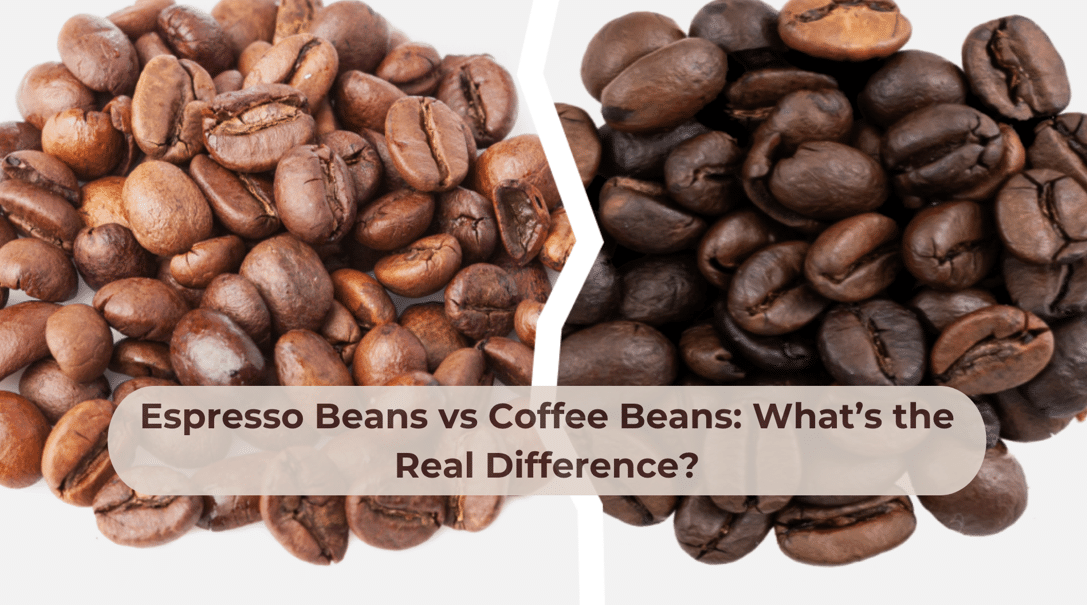
Now, to put it simply, espresso beans vs coffee beans are the same, just roasted or brewed differently.
The Difference Is Roasting
Espresso Beans
Espresso beans tend to be roasted longer, creating a darker roast. This gives them:
- Stronger, fuller, and bolder taste, even with a small flow through the espresso machine
- Less acidic with a consequently lower acid taste
- An oily coating, indicating that the coffee is roasted dark with more oils present
This all contributes to the espresso experience, such as its intense flavors and crema.
Coffee Beans
Generally, beans for drip or filter coffees are of medium to light roast. These beans:
- Retain more of their inherent flavors from their place of origin:bery, nutty, floral
- Have higher acidity, which adds brightness to the taste
- Contain more acidity, giving the coffee more brightness • Offer a greater variety of flavor profiles depending on where it’s grown
- Have a more diverse range of flavors from different regions
That’s why drip coffee tends to be less robust in taste than espresso.
Grind Size and Brewing Style
The grind and how coffee is brewed also play an important role.
Espresso Grind
- Nearly powder sugar-like consistency, so it can be extracted quickly
- Brewed with pressure from an espresso machine
- Allows water to flow through faster and brew intense flavors
This is the grind you need to produce espresso.
Coffee Grind
- Medium to coarse grind that will feel more like sand or sea salt
- Used when brewing coffee using a French press or a drip coffee maker
- Extends the time water is in contact with the coffee
This slower brewing process results in a smoother and more balanced cup.
Flavor and Strength Comparison
Espresso
- The smallest coffee serving with a concentrated taste
- Syrup-like consistency, rich and luscious in the mouth
- Crowned with a milky crema, providing fragrance
Espresso is used to make other popular coffee beverages such as lattes, cappuccinos, and macchiatos.
Coffee
- Mild, less bitter flavor, so it can be enjoyed for longer
- Brewed and served in larger cups for a slower sipping experience
- Lower and slower caffeine content
Espresso has a stronger flavor, but it’s also more bitter than regular coffee, and can taste bitter if you drink too much.
Can You Make Coffee with Espresso Beans?
You can use coffee beans to make espresso, but the espresso will be bitter and intense.
But your espresso won’t taste as rich and creamy if you use coffee beans.
When it comes to taste, it’s best to use the right coffee bean for the right type of coffee.
Best Machines to Brew Espresso and Coffee at Home
A machine for making espresso can help you enjoy the espresso taste. If you want, there are some great options here on Amazon.
1. Philips 3200 Series Fully Automatic Espresso Machine
The Philips 3200 Series is all automatic for ease and reproducibility. Great for barista-style coffees, without the faff.
Key Features:
- One-button espresso, coffee, and cappuccino
- Built-in ceramic grinder
- LatteGo frothing system
- Easy cleaning and maintenance
If you are a beginner, short of time, and want good coffee with a faster brewing time, this is it.

Source: Amazon
2. Gaggia Classic Pro Espresso Machine
If you love to make coffee at home, then the Gaggia Classic Pro gives you espresso at coffee shop quality.
Key Features:
- Professional style portafilter
- Coffee shop style steamer
- Sturdy stainless steel body
- Very stable platform for avoiding water cooling during brewing
And because you have full control over your brewing process, it’s a good choice if you would like to try different beans for your espresso.

Source: Amazon
Which One Should You Choose?
Your requirement best drives the choice time.
Choose Espresso Beans If:
- You have a preference for strong flavors
- You like to make popson-based espresso drinks such as a latte
- You are looking for a quick energy boost
Choose Coffee Beans If:
- You prefer less bitter coffee
- You like to slow-brew coffee
- You like to slow-brew coffee
Understanding the differences between espresso and coffee beans will allow you to prepare coffee the way you like it.
How to Make It Taste the Best
These suggestions will help you get more out of any variety of coffee:
- Use freshly ground beans
- Store beans in an airtight container
- Use filtered water
- Coarse grind for brewing coffee
The devil is in the (coffee) details
Frequently Asked Questions
- Do espresso beans have more caffeine than coffee beans?
Espresso beans are stronger in taste, boiled in a dark roast, and in very little water, but espresso and coffee have comparable caffeine content.
- Can I make espresso with coffee beans?
Yes, but it may not taste as strong or produce crema.
- Why are espresso oils?
Espresso beans are oily because of the longer roast needed to produce them.
- Starters’ beans?
The best place to start is with medium roast coffee beans.
Conclusion
Using espresso beans versus coffee beans comes down to personal preference, rather than quality. Espresso beans have fuller, stronger flavors and are great for espressos and milk coffees. Coffee beans are gentler and slower, and taste less intense.
You can brew espressos at home using an espresso machine such as a Philips 3200 or a manual Gaggia Classic Pro.
Now that you know, it’s easier to choose beans and machines – and better to enjoy your coffee. See coffeemachinecompare for the best machines, deals, and reviews before you choose.