Contents
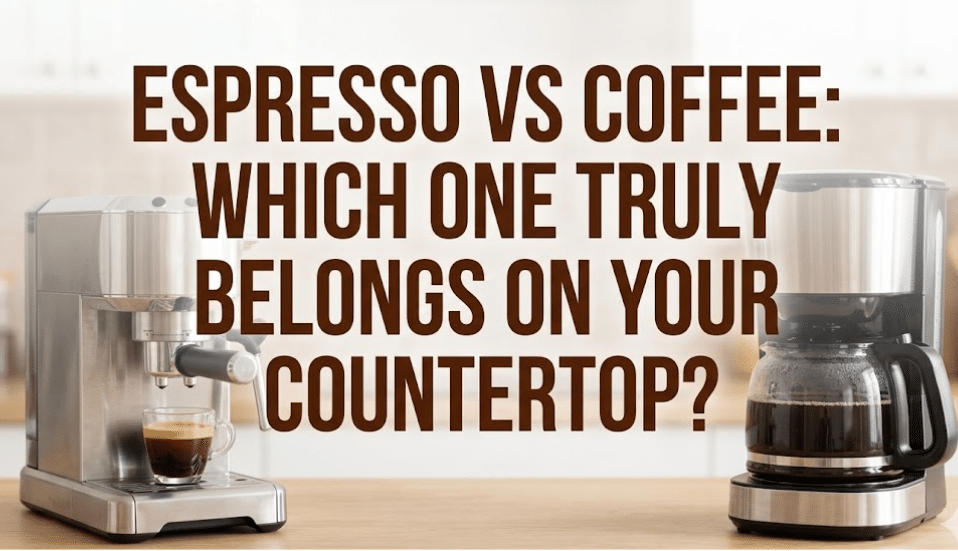
Your choice between espresso and coffee is an important part of your morning routine. Although both drinks come from the same roasted beans, they offer distinct experiences.
You should know the difference between espresso and coffee to make better decisions when setting up your coffee station. Let’s cover the steps, flavors, and machine needed to make the perfect cup of coffee to start your day.
Espresso and Coffee Basics
What is Drip Coffee?
Drip coffee relies on gravity to draw hot water through a bed of medium-coarse coffee grounds. This process takes several minutes, and the hot water captures different flavors from the coffee beans.
The result is a balanced cup of coffee. It can be made in a variety of quantities. The gentle nuances of the beans are drawn out, making it a perfect choice to sit back and enjoy a warm cup.
What is Espresso?
Unlike drip coffee, espresso is made through a process called pressure brewing. This involves a high-pressure pump that is set to an exact pressure of 15-20 bars. It is used to push almost boiling water through the espresso puck and takes about 25-30 seconds to complete.
The finished espresso drink has a viscous, syrupy consistency. It is finished with a rich cream that holds aromatic oils and essences. These concentrated flavors are the foundation of most drinks at your favorite coffee shops, such as lattes and macchiatos.
Major Differences in Brewing Technique
Pressure is the main difference in the espresso vs coffee argument. With filter coffee, the coffee is brewed under normal atmospheric pressure for a longer time to draw out the sugars and acids.
Espresso, on the other hand, is brewed with a lot of mechanical pressure to draw out and emulsify the coffee oils. This type of pressure produces the thick and concentrated coffee that regular filter coffee cannot produce.
If you want to replicate the flavors and the creamy consistency of cafe drinks, you need to use an espresso machine. It offers the required pressure.
Flavor, Strength, and Caffeine Comparison
Caffeine Content per Cup
Most people think that brewed coffee has a lot more caffeine in it than espresso. This is a common misconception. Espresso is served in a very small volume relative to brewed coffee, usually around 30 mL. This does not mean that it has more caffeine. In fact, it has much less than the same volume of brewed filter coffee.
Brewing Time and Convenience
Drip coffee makers are more convenient than espresso makers. With a drip machine, you can add water and the grounds and just wait for it to finish brewing. Espresso requires a lot more work. Success in espresso brewing requires grinding, tamping, and all the monitoring. That said, modern home espresso machines have made this a lot easier and faster for the average user.
Taste Profile Variations
When it comes to drip coffee vs espresso coffee, drip coffee has a smoother and more consistent texture. Most people think a ripe coffee has a more tea-like taste. Espresso is the complete opposite. It is very thick and has an intense taste.
It is very concentrated and is a very good base for milky drinks like lattes and cappuccinos. Frothed milk in lattes and cappuccinos also allows it to maintain its coffee intensity.
What Suits Your Daily Routine?
Best Choice for Slow Morning Coffee Drinkers
Drip coffee makers win. If you want to enjoy a large mug of coffee to sip on while reading or doing anything, you’re in luck. There’s little effort on your part besides the initial setup.
Plus, you can program the machine to start brewing at a specified time. Wake up to the smell of fresh coffee. Did we mention it’s family-friendly? Drip coffee makers can have as many as 10 cups in a single brew.
Best Options for Quick Energy Boost
Espresso is the best choice if you want to get a fast and strong caffeine hit and also if you would like milk-based beverages. You can personalize a shot or a latte that takes less than a minute to prepare.
On top of that, you avoid spending money on a coffee shop. Learning how to use your own espresso machine can become a hobby, and you can get your money back within a few months.
Best Options for Your Countertop
If you are contemplating starting your espresso journey, the first machine you will want is one that can create espresso at a consistent temperature and level of pressure.
Atatix Espresso Machine with Milk Frother
This 20-bar machine gives you very consistent results while offering you very good ease of use. This machine also has a removable water tank that holds 44oz of water, so you will not have to refill the tank as frequently.
You can brew coffee more quickly and be more productive during your morning coffee routines. This machine also offers you both an automatic 28-second single-shot extraction as well as a manual option so that you can create your own custom concentrations.

Source: Amazon
CASABREWS CM5418 Espresso Machine
This compact unit fits even the smallest kitchens with its 5.47-inch width. It has a professional 20-bar Italian pump and an integrated pressure gauge. For beginners, the pressure gauge acts as a visual confirmation tool to achieve perfect extraction pressure.
Thanks to a 1350W heating system, water will reach the desired temperature in a matter of seconds, reducing wait times before pulling your first shot.

Source: Amazon
Wrap Up!
No matter if you like espresso drinks and love the process of making every drink yourself, or if you’d rather sit back and let the machine do the work and enjoy a simple cup of drip coffee, having the right machine will make your coffee experience better.
Do you like making your own drinks? You can choose the versatile Atatix or the precise CASABREWS, and you will immediately notice the difference. In the great coffee vs espresso debate, the right machine makes the day right!